

Short Term Loans in South Africa – Fast Online Approval
Apply for a short term loan online in minutes. Submit one free application and get matched with trusted South African lenders based on your income and affordability.
- No hidden fees. No spam. No impact on your credit score. 100% secure and POPIA-compliant.
✓ One application, multiple lenders
✓ Fast approval and quick payouts
✓ Secure & encrypted process
✓ Free to apply, no obligation
🔒 Secure & Encrypted
💳 No Credit Score Impact
⚡ Fast Loan Matching
✔ 100% Free Service
Short Term Loans in South Africa – Fast Cash When You Need It
Short-term credit in South Africa has grown rapidly, with more consumers turning to small, fast loans to cover real cash shortfalls. Whether it’s an unexpected bill, car repair, or urgent expense, these loans are often used to bridge the gap until your next income
If you’ve been declined by a bank or need a smaller amount quickly, you’ll understand why short-term loans exist. They’re designed for speed and accessibility. While they can cost more than traditional loans, they are regulated under the National Credit Act, with limits on fees and interest.
This page explains how short-term loans work in South Africa, what they cost under NCA regulations, when they make sense, and when a different option may be more suitable for your situation.
ClearLoans is a loan matching platform, not a lender. We connect South African applicants with NCR-registered credit providers. Loan terms, rates, and approvals are determined by each individual lender under the National Credit Act.
Find Out What Short-Term Loan Options You Qualify for Today
Answer a few simple questions and get matched with lenders ready to review your request. No obligation. 100% secure.
✔ Takes less than 2 minutes ✔ No impact on your credit score ✔ Secure & POPIA compliant
How to Apply for Short Term Loans in South Africa
Applying for short term loans in South Africa has become quick and convenient with online loan platforms. Instead of contacting several lenders or completing multiple loan applications, you can submit one simple online enquiry and explore loan options from lenders who may be able to assist.
ClearLoans helps connect South Africans with lenders that offer short term loans, payday loans, and other fast cash loan options designed to help cover temporary financial needs. Whether you need help managing unexpected expenses, emergency costs, or short-term cash flow issues, online loan applications make the process simple and accessible.
Applying for a short term loan through ClearLoans typically involves three straightforward steps.

Complete the Online Loan Application
Start by filling out the secure online short-term loan application form. You’ll be asked to provide basic information such as the loan amount you need, your employment status, income range, and contact details. This helps lenders understand your financial situation and assess whether they may be able to assist.

Your Application Is Reviewed by Lenders
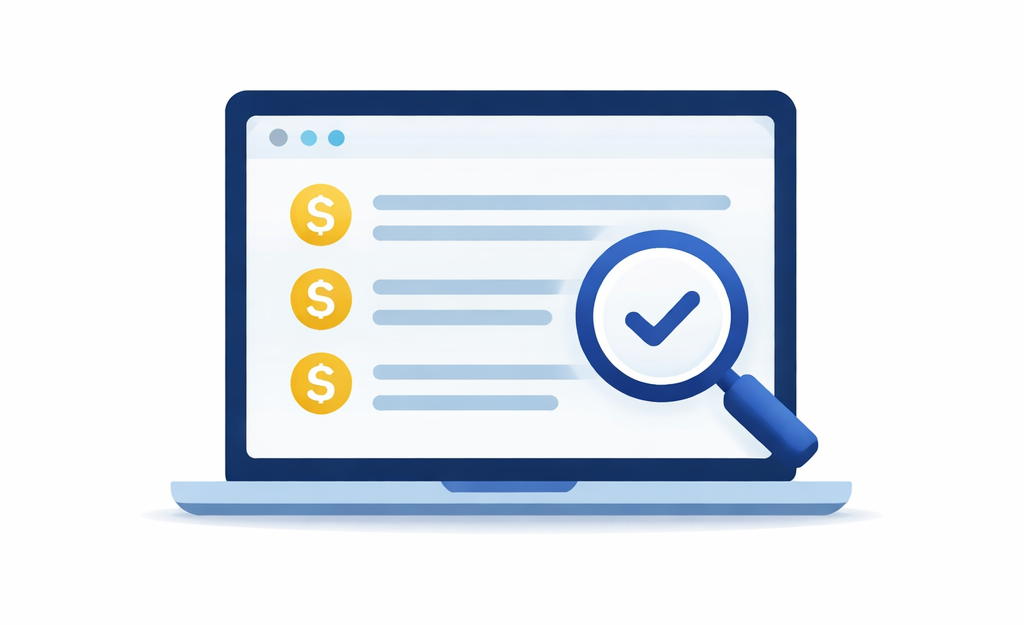
Once your enquiry is submitted, your application may be shared with lenders who review short term loan applications in South Africa. Each lender evaluates the information provided based on their own lending criteria and affordability requirements.

Review Loan Options from Lenders
If a lender believes you may qualify, they may contact you with details about a possible loan offer. This could include information such as the loan amount available, repayment terms, interest rate, and estimated repayment schedule, allowing you to decide whether the loan suits your needs.

Why Thousands of South Africans Choose ClearLoans
ClearLoans connects South Africans with trusted lenders through a simple and secure online loan request. Fast, secure and with no impact on your credit score.

Fast Loan Requests
Submit your secure online application in minutes and get connected with trusted South African lenders.
Secure & Private
Your personal and financial information is protected with secure encryption and trusted technology.

Multiple Lender Options
Your request may be reviewed by multiple lending partners, increasing your chances to find the right loan
100% Free Service
Applying through ClearLoans is completely free with no hidden fees or obligations.
What Is a Short-Term Loan in South Africa? The NCA Definition
Under the National Credit Act, a short-term loan — legally classified as a ‘short-term credit transaction’ — is defined by two hard limits:
- Maximum loan amount: R8,000
- Maximum repayment term: 6 months
If a loan is under R8,000 and repayable within 6 months, it falls into the short-term credit category with its own specific interest rate caps and fee structure. If it’s larger or longer, it becomes an unsecured personal loan with different NCA regulations.
In common usage, ‘short-term loan,’ ‘microloan,’ ’emergency loan,’ and ‘payday loan’ are often used interchangeably. Technically they’re not identical — a payday loan specifically ties repayment to your next salary — but they all fall within the NCA’s short-term credit category and are subject to the same regulated limits. For the purposes of applying through ClearLoans, the products are effectively the same.
| Feature | Short-Term Loan (NCA) | Unsecured Personal Loan (NCA) |
|---|---|---|
| Maximum amount | R8,000 | R300,000+ |
| Maximum term | 6 months | 72 months |
| Interest rate cap (first loan) | 5% per month (60% p.a.) | Repo + 21% p.a. (currently 28.5% p.a.) |
| Interest rate cap (second loan, same year) | 3% per month (36% p.a.) | No second-loan discount |
| Initiation fee cap | R165 + 10% above R1,000 (max R1,050) | R1,207.50 for loans above R10,000 |
| Monthly service fee cap | R60 per month | R69 per month |
| Typical approval speed | Hours to same day | Hours to 5 business days |
| Best for | Urgent, small gaps — R500 to R8,000 | Larger needs, longer repayment horizons |
The NCA Rate Structure: First Loans vs Second Loans
This is a feature of SA short-term lending that most borrowers don’t know about and that no major competitor explains properly. The NCA sets two different maximum rates depending on how many short-term loans you’ve taken in a given calendar year.
| Loan in Calendar Year | Maximum Interest Rate | On R3,000 over 3 months |
|---|---|---|
| First short-term loan of the year | 5% per month | Interest: R450 (R150/month × 3) |
| Second or subsequent short-term loan | 3% per month | Interest: R270 (R90/month × 3) |
The 3% cap on subsequent loans applies per lender — so if you’ve taken a short-term loan with Lender A this calendar year, a second application to Lender A should attract the 3% cap, not 5%. This matters: on a R5,000 loan over 6 months, the difference between 5% per month and 3% per month is R600 in total interest.
If you’re applying through ClearLoans and have already taken a short-term loan this calendar year, declare this in your application. It may affect which rate you’re quoted and your right to the lower cap.
The 3% second-loan rate applies within a calendar year (January to December), not a rolling 12 months. A first loan in November and a second loan in January are both first loans of their respective calendar years.
The Full Cost Breakdown: Every Fee the NCA Allows
South African short-term lenders can charge three categories of fees under the NCA. No other fees are permitted. If any lender charges anything outside these three categories before disbursing your loan, they are breaking the law:
| Fee Type | NCA Maximum | Notes |
|---|---|---|
| Interest | 5% per month (first loan) / 3% per month (second loan) | Applied to outstanding balance; decreases as you repay |
| Initiation fee | R165 + 10% of amount above R1,000; capped at R1,050 | Once-off; may be added to loan principal or deducted from payout |
| Monthly service fee | R60 per month (incl. VAT) | Charged for each month the loan is active |
| Credit life insurance | R4.50 per R1,000 outstanding per month | Optional in most cases; covers death, disability, retrenchment |
These are the legal maximums. Not every lender charges the maximum. Some charge less, particularly on interest. Always ask for the full cost of credit — the rand amount you’ll repay in total — before accepting any offer.
Real-World Cost Examples
Example 1: R2,000 for 1 month (first loan of the year)
| Cost Component | Calculation | Amount |
|---|---|---|
| Loan amount | R2,000 | |
| Interest (5% × 1 month) | R2,000 × 5% | R100 |
| Initiation fee | R165 + (10% × R1,000) | R265 |
| Monthly service fee | R60 × 1 month | R60 |
| Total repayable | R2,425 | |
| Total cost of credit | R425 on R2,000 borrowed |
Example 2: R5,000 for 4 months (first loan of the year)
| Cost Component | Calculation | Amount |
|---|---|---|
| Loan amount | R5,000 | |
| Initiation fee | R165 + (10% × R4,000) | R565 |
| Monthly service fee | R60 × 4 months | R240 |
| Interest (5% per month on declining balance) | Approx. | R560 |
| Total repayable | Approx. R6,365 | |
| Total cost of credit | Approx. R1,365 on R5,000 borrowed |
Example 3: R5,000 for 4 months (second loan — 3% cap applies)
| Cost Component | Calculation | Amount |
|---|---|---|
| Loan amount | R5,000 | |
| Initiation fee | R165 + (10% × R4,000) | R565 |
| Monthly service fee | R60 × 4 months | R240 |
| Interest (3% per month on declining balance) | Approx. | R336 |
| Total repayable | Approx. R6,141 | |
| Total cost of credit | Approx. R1,141 on R5,000 borrowed |
The 3% second-loan cap saves approximately R224 on this example — not life-changing, but real. On the maximum R8,000 over 6 months, the saving is approximately R960.
Siphiwe’s Story: A Short-Term Loan That Made Sense
Siphiwe is 29, a warehouse supervisor in Germiston earning R11,200 per month net. On a Thursday afternoon, his car — which he needs to reach his shift at 5am — fails its roadworthy and needs R4,200 in repairs. His next payday is 11 days away. He has R800 in his account.
He applies through ClearLoans on Friday morning. His income is verifiable, his bank statements are clean, and he’s never taken a short-term loan this calendar year. He receives an offer: R4,200 over 2 months at 4.8% per month.
- Initiation fee: R165 + (10% × R3,200) = R485
- Monthly service fee: R60 × 2 = R120
- Interest: approximately R421
- Total repayable: approximately R5,226
- Two monthly debit orders of approximately R2,613
As a percentage of his monthly net income, each repayment is 23.3% — uncomfortable but manageable. Without his car, he loses the job. The total cost of credit — R1,026 on R4,200 — is the price of keeping employment. He repays on time, closes the account, and moves on.
That’s what a short-term loan is for: a specific, time-limited emergency where the cost of not borrowing is higher than the cost of borrowing. Siphiwe knew exactly what it would cost before he signed. He didn’t roll it over. That’s responsible short-term borrowing.
Is a Short-Term Loan Right for You? — Self-Assessment
✓ A short-term loan is likely appropriate if ALL of the following are true:
- You have a specific, genuine emergency expense — not a lifestyle shortfall
- You need R500 to R8,000, and you’ll need it within days, not weeks
- You have a verifiable, stable income that will support repayment
- The total cost of credit is affordable — monthly repayment under 25–30% of your net income
- You have a clear plan to repay within 1–6 months and won’t need to roll the loan over
- You’ve compared the total cost, not just the monthly repayment
✗ A short-term loan is likely NOT appropriate if any of these apply:
- You’re borrowing to get through everyday expenses — groceries, rent, recurring bills
- You’re planning to roll it over or take another short-term loan to repay this one
- The monthly repayment would leave you unable to cover rent, food, transport, and utilities
- You’re already under debt review — the NCA prohibits new credit in this situation
- You’ve taken multiple short-term loans this year and find yourself continuously in the cycle
- A personal loan at a lower annual rate would serve the same purpose — check this first
Short-Term Loan vs Personal Loan: When Each Makes Sense
Many South Africans apply for short-term loans when a personal loan would cost them substantially less. Understanding the difference saves money:
| Situation | Better Product | Why |
|---|---|---|
| Need R3,000 for a car repair, can repay in 2 months | Short-term loan | Personal loans rarely approved below R5,000; short-term is built for this |
| Need R8,000 for a medical procedure, can repay in 3 months | Either — compare total cost | Short-term at 5%/month: ~R3,165 over 3 months. Personal loan at 28.5% p.a.: cheaper if you qualify |
| Need R8,000 but can only afford repayment over 12 months | Personal loan | Short-term loans max out at 6 months — a 12-month term requires a personal loan |
| Need R15,000 for home repairs | Personal loan only | Exceeds R8,000 short-term maximum — must be a personal loan |
| Need money urgently within hours, documentation ready | Short-term loan | Online short-term lenders frequently disburse same day; banks may take 2–5 days |
| Have good credit and 48 hours to spare | Personal loan | Rate is substantially lower — 20–28.5% p.a. vs 60% p.a. maximum on short-term |
The decision rule: if you need under R8,000 and genuinely cannot wait for or qualify for a personal loan, a short-term loan is appropriate. If you have time, a stronger credit profile, or need more than R8,000, apply for a personal loan through ClearLoans — the NCA rate cap is significantly lower and the total cost will be meaningfully less.
The Short-Term Debt Cycle — and How to Avoid It
The NCR’s Consumer Credit Market Report shows the unsecured credit default ratio reached a record high of 23.7% in Q3 2024. A meaningful portion of that figure involves borrowers caught in what researchers call the short-term debt cycle: taking a new short-term loan each month to cover the gap created by repaying last month’s short-term loan.
The cycle works like this: you borrow R3,000 in January. Repayment of R3,590 is due in February (R3,000 plus fees and interest). Your February salary is now R3,590 short. You borrow R3,000 again. The cycle repeats. Within four months, you’ve paid over R2,000 in fees and interest while your underlying financial position hasn’t improved at all.
FinMark Trust research identifies the early warning signs:
- You’ve taken a short-term loan in more than three consecutive months
- Your loan purpose has shifted from a specific emergency to general living costs
- The amount you’re borrowing is gradually creeping up each month
- You’re taking a short-term loan specifically to cover a returned debit order on another loan
If you recognise two or more of these, a short-term loan is no longer solving your problem — it’s compounding it. The appropriate response is to stop borrowing short-term and either build a small emergency fund first (even R500 in a savings pocket prevents most of the emergencies that trigger this cycle) or speak to a registered debt counsellor about restructuring your finances under Section 86 of the NCA. Find one free at www.ncr.org.za.
Qualification Requirements
Most NCR-registered short-term lenders in South Africa require:
- Valid South African ID — green barcoded ID book or smart card
- 18 years old or over
- A regular, verifiable income — employment, pension, or consistent self-employment
- A South African bank account in your own name, into which your income is paid
- Your most recent payslip or 3 months of bank statements showing consistent income
- Proof of South African residence not older than 90 days
- Ability to pass an NCA Section 81 affordability assessment
Short-term lenders often have more flexible credit requirements than banks — many will approve applicants with adverse listings or impaired credit records, provided the current income is stable and the bank statement behavior is clean. What they cannot do under the NCA is ignore the affordability assessment. A lender who approves you without verifying you can repay is committing reckless lending — a criminal offence under Section 80 of the NCA.
How to Spot an Illegal Short-Term Lender
South Africa has an estimated 40,000 illegal lenders operating outside the NCA — a figure cited by public sector researchers and consumer protection organisations. They specifically target people who’ve been declined by registered lenders. These are absolute red flags:
| Red Flag | What It Means |
|---|---|
| Any upfront fee required | No registered lender charges fees before disbursing. This is the single clearest sign of a scam. |
| WhatsApp or Facebook loan offer | No legitimate credit provider recruits through personal social media messages. Every such message is a fraud attempt. |
| ‘Guaranteed approval’ for all applicants | Registered lenders must conduct affordability assessments. Guaranteed approval regardless of circumstances is illegal. |
| Interest above 5% per month on first loan | The NCA cap is 5% per month. Any lender quoting higher is unregistered. |
| No NCR registration number provided | Verify at www.ncr.org.za before sharing any personal or banking information. |
| Request for your ATM card and PIN | This is how mashonisas — illegal informal lenders — operate. No registered lender will ever ask for your card or PIN. |
| No written cost disclosure before signing | The NCA requires a pre-agreement statement disclosing all costs. No disclosure means no signature. |
Defrauded by an illegal lender? Report immediately to: NCR — 0860 627 627. South African Police Service — 10111. SABRIC (banking fraud) — 011 847 3000. If money was transferred to the fraudster, call the receiving bank’s fraud line immediately — some transfers can be recalled within hours.
What Happens If You Can’t Repay
Contact your lender before the repayment date — not after it has failed. Most NCR-registered short-term lenders would rather negotiate a revised payment arrangement than absorb the administrative cost of a formal default and debt collection process.
If you let the debit order fail:
- Your bank charges a returned debit order fee — typically R150 to R250
- The lender charges a default fee as permitted under your agreement
- The missed payment is reported negatively to credit bureaus
- If unresolved, the account passes to a debt collector
- In serious cases, the lender may obtain a court judgement, which lists for up to 5 years
One missed short-term loan payment, handled proactively, rarely causes lasting damage. A pattern of missed payments on multiple accounts, ignored, can take years to recover from. Contact the lender first — before the date, not after.
Frequently Asked Questions — Short-Term Loans South Africa
How much can I borrow with a short-term loan?
Under the NCA, short-term loans are capped at R8,000 for terms up to 6 months. Most lenders offer R500 to R8,000 for first-time applicants. Some extend higher amounts — up to R15,000 — to returning customers with a clean repayment history, but these are technically no longer short-term credit transactions and are classified differently. The amount you’re offered depends on your monthly income and affordability assessment.
What’s the maximum interest rate on a short-term loan?
The NCA sets a maximum of 5% per month on your first short-term loan in a calendar year, and 3% per month on any subsequent short-term loans in the same year. This is significantly higher than the annual rate on personal loans (currently capped at 28.5% p.a.) — which is why short-term loans should be used only for short periods. At 5% per month over 6 months, you’re paying 30% of the principal in interest alone before fees.
Can I get a short-term loan with bad credit?
Many short-term lenders consider applicants with impaired credit records — missed payments, defaults, judgements — if your current income is stable and your recent bank statement behaviour is clean. A 2-year-old default with 12 months of clean account behaviour is a very different risk profile to a fresh unpaid judgement. Approval is not guaranteed, and you should expect a higher rate or smaller initial amount. If every lender declines you, your credit impairment may be severe enough that a short-term loan isn’t the right product — debt counselling may be more appropriate.
How quickly can I receive the money?
Many online short-term lenders in South Africa can disburse within hours of a completed application on business days. Some use PayShap — South Africa’s instant payment rail — for near-immediate transfer once approved. Delays most commonly occur when documents are missing or mismatched, or when the application arrives on a weekend or public holiday. ‘Same-day’ payout is realistic for applications submitted before midday on a business day with complete documentation.
What is the initiation fee on a short-term loan?
The NCA caps the initiation fee on short-term loans at R165 plus 10% of the loan amount above R1,000, with a ceiling of R1,050. On a R2,000 loan, the initiation fee is R265 (R165 + 10% of R1,000). On any loan above R9,850, the R1,050 ceiling kicks in. This is a once-off fee, not a monthly charge — but it applies each time you take a new loan.
Can I repay early?
Yes. Under Section 125 of the NCA, you have the right to settle any credit agreement in full at any time. A settlement fee may apply — it cannot exceed three months’ interest on the outstanding balance and must be disclosed in your agreement. On a short-term loan where interest accumulates monthly, early settlement typically saves meaningful interest. If you repay a 3-month loan in month 1, you avoid two months of interest charges.
What’s the difference between a short-term loan and a payday loan?
A payday loan is a type of short-term loan specifically structured around your next salary date — you borrow until payday and repay in one lump sum. A short-term loan can be structured as a payday loan or as an instalment loan with monthly repayments over 2–6 months. Both fall within the NCA’s short-term credit category with the same rate caps and fee limits. For most borrowers, the instalment structure is easier to manage than a single large repayment on payday.
Can I take a short-term loan if I’m under debt review?
No. The NCA expressly prohibits credit providers from granting any new credit — including short-term loans — to consumers under formal debt review. Any agreement in violation of this is void and illegal. If you are under debt review and need financial relief, work through your registered debt counsellor, not through a new loan application.
Is it safe to apply for a short-term loan online?
Yes, through a reputable platform that handles your data under POPIA. ClearLoans uses encrypted data transmission and shares your information only with vetted, NCR-registered lending partners for the purpose of your loan enquiry. Never submit your ID, bank account details, or income information to an individual on social media, WhatsApp, or an unverified website. Verify every lender’s NCR registration at www.ncr.org.za before sharing any personal information.