
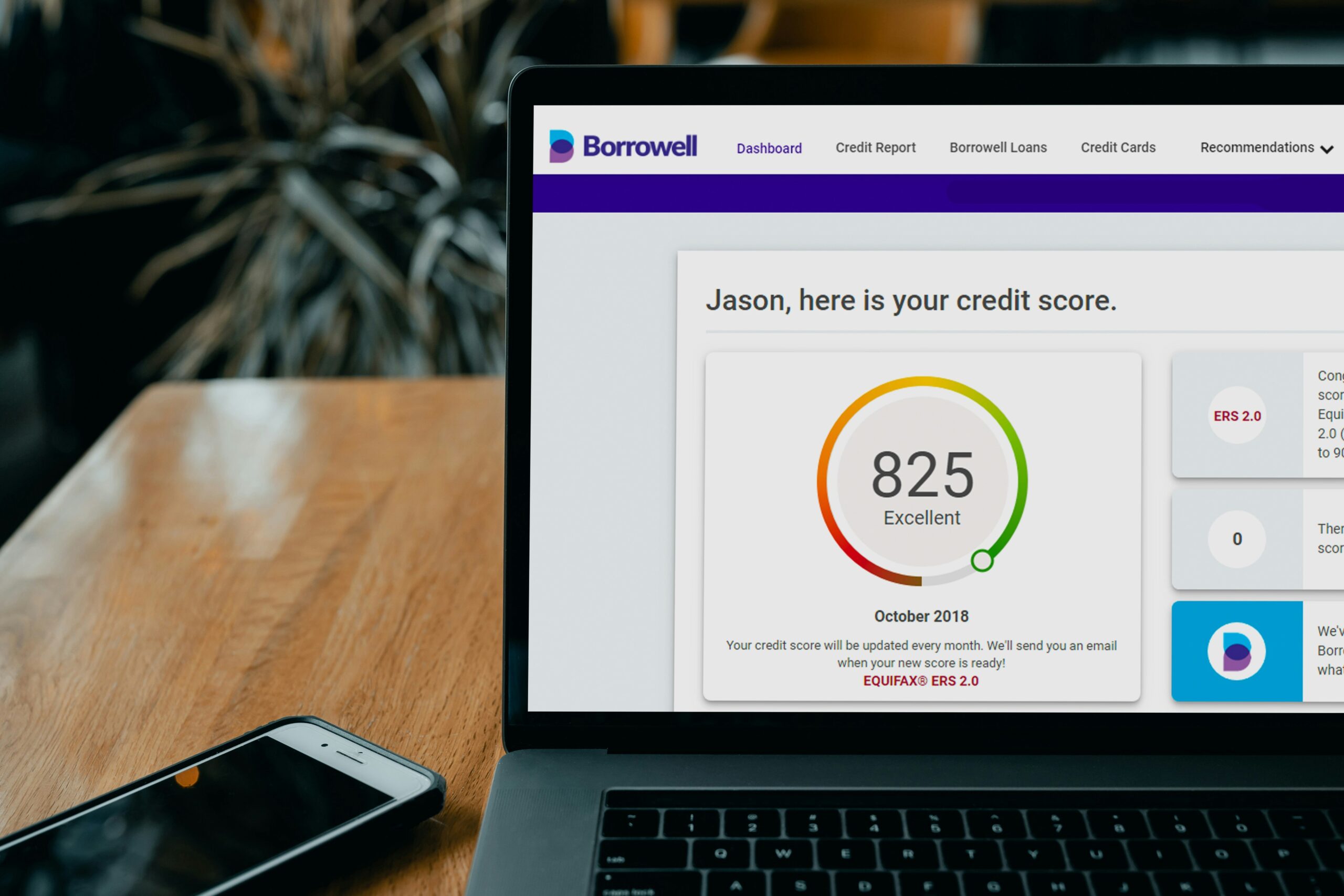
Fixing a low credit score is not a single action. It is a sequenced programme of specific interventions, each targeting a defined component of the score, executed in the order that produces the greatest improvement per month against the specific profile in question. The sequence matters as much as the actions — doing the right things in the wrong order produces slower results than doing them in the right order.
This article builds the full credit score repair programme from first principles: what is dragging the score down, which repairs are possible immediately, which require time, and how to structure the work so that each month of effort compounds into the next. The approach is not motivational. It is mechanical — the score is a calculated output of specific inputs, and changing the inputs changes the output, predictably and measurably.
Step 1: Diagnose Before Prescribing — Pull All Four Bureau Reports
No credit repair programme begins without a current, complete credit report from all four South African bureaus: TransUnion, Experian, XDS, and Compuscan. Not one. All four. Here is why this is non-negotiable:
- Different creditors report to different bureaus. An adverse listing on the TransUnion file may not appear on the Experian file, and vice versa — because the creditor who originated the listing only reports to one bureau. A lender assessing your profile may check any one of the four.
- Errors are bureau-specific. An incorrect late payment notation on the XDS file will not be visible on the TransUnion file. Fixing only the TransUnion file leaves the XDS error unaddressed and visible to any lender who checks XDS.
- The full picture requires all four. Only by reviewing all four files can the complete obligation stack, the full adverse history, and the complete enquiry pattern be seen as any given lender sees it — depending on which bureau they access.
Each bureau offers a free annual credit report. Access all four before taking any action. The repair programme is built on what these reports contain — not on assumptions, not on a single score number from a financial app.
Step 2: Triage — Categorise Every Issue by Type and Urgency
After pulling all four reports, categorise every issue found into one of four repair categories:
| Category | What It Includes | Repair Mechanism | Score Impact Timeline |
| Errors — remove immediately | Incorrect payment status; wrong balance; identity errors; listings past retention period | Bureau dispute with supporting documentation | 15–45 days — fastest score improvement available |
| Active adverse — resolve | Active defaults; active judgments; debt handed to attorneys | Settle with creditor; obtain written confirmation; verify bureau update | 60–90 days for resolution + bureau update |
| High utilisation — reduce | Revolving credit above 30% utilisation | Pay down balances; confirm bureau reporting date | 30–45 days once payment made before statement date |
| Thin payment history — build | Few accounts; short history; no positive payment pattern | Maintain all existing accounts; add one secured or low-limit product if needed | 6–12 months of consistent behaviour |
Table 1: Credit repair triage — four categories, the repair mechanism for each, and the score impact timeline
Work the categories in order: errors first (fastest improvement, zero cost), active adverse second (highest priority for lender accessibility), high utilisation third (fastest behavioural improvement), thin history fourth (longest timeline, least urgent for immediate applications). This is the sequence that produces the maximum score improvement in the shortest time.
Step 3: Dispute and Remove Every Error
Bureau errors — wrong data that damages the score — are the highest-return repair action because they produce score improvement without requiring months of changed behaviour. A single successfully disputed error can produce a score improvement that three months of on-time payments would not replicate.
The Most Common Bureau Errors in South Africa
- Payment status errors: A payment made on time that the creditor’s system recorded as late due to a processing delay. Common when payment is made near the due date and the creditor processes end-of-day in a different time window from the bank.
- Identity mix-ups: Another consumer’s adverse information appearing on your file because of a matching name, shared address, or (rarely) ID number data error. These can be severe — an entire adverse history belonging to someone else appearing on your file.
- Stale listings: Adverse notations that have exceeded their NCA retention period and should have been automatically removed. Late payment listings older than two years; default listings older than five years; written-off debt listings older than one year.
- Settled accounts still showing as outstanding: A debt that was paid, settled, or written off that still reflects as an active balance on the bureau file because the creditor did not update the bureau after resolution.
- Duplicate listings: The same account or the same adverse event appearing more than once on the file, compounding the score damage beyond what the single event warrants.
The Dispute Process
- Identify the specific listing to dispute and collect supporting documentation. Bank statement showing payment on time; settlement letter from creditor; proof of identity and account number.
- Submit the dispute in writing to the specific bureau where the error appears. Online dispute submission is available at all four bureaus. Include the account details, the incorrect data, and the evidence.
- The bureau must investigate within 20 business days and either correct or confirm the listing. If the investigation confirms the error, the bureau must correct or remove the listing within five business days of the outcome.
- Pull the bureau report again 30 days after dispute submission to verify the correction. If the dispute outcome was in your favour and the listing is still present, follow up with the bureau in writing.
- Escalate to the NCR if the bureau fails to resolve within 20 business days. The NCR at ncr.org.za accepts complaints about bureau non-compliance with the NCA.
Step 4: Address Active Adverse Listings Strategically
For adverse listings that are accurate — late payments that did happen, defaults that are genuine — the repair approach is different. Accurate listings cannot be disputed away. They age off on their prescribed timeline while positive payment behaviour is built alongside them.
However, for active defaults specifically, settlement changes the listing from ‘active default’ to ‘settled default’ or ‘paid’ — which, while not removing the notation, changes what lenders read. An active default tells a lender: ‘this obligation is currently unresolved.’ A settled default tells a lender: ‘this obligation was resolved, albeit after difficulty.’ The first reading signals ongoing financial distress. The second signals a resolved historical event. The practical difference in lender responses is material, particularly at specialist lenders whose assessment models distinguish these two statuses.
| Adverse Listing Type | Best Action | What Changes After |
| Active default — recent (under 2 years) | Settle in full; obtain written confirmation; allow 60 days for bureau update | Status changes from active to settled; forward-looking signal improves significantly |
| Active default — older (2–4 years) | Settle if affordable; verify event date; approaching 5-year removal | Settlement + approaching removal = rapidly improving profile |
| Court judgment — unpaid | Pay in full; obtain receipt; apply for rescission at magistrate’s court | Rescinded judgment removed before 5-year period; most powerful single action |
| Court judgment — paid, not rescinded | Apply for rescission with proof of payment | Removes listing immediately on rescission; no need to wait 5 years |
| Late payment (accurate) | No action possible on the notation — build clean history alongside it | Score improves as positive payment events accumulate; adverse ages off at 2 years |
| Write-off notation | Verify event date — 1-year retention; dispute if past retention date | If within retention: accept and build positive history. If past: dispute immediately |
Table 2: Active adverse listing strategy — the best action for each type and what changes after
Step 5: Build the Positive Payment History That Repairs the Score
Errors removed and active adverse listings resolved, the remaining score repair is done through consistent positive payment behaviour — and it is the work that cannot be shortcut or accelerated beyond the monthly bureau update cycle. Twelve months of clean payments across all accounts is the most powerful single signal in the credit file. It does not happen in thirty days. It happens in twelve payments, one per month, each one adding a data point to the payment history component that was damaged.
The Compounding Effect of Consistent Payment
Payment history is not simply counted — it is weighted by recency. The last six months of payment history carry more weight in the scoring model than the twelve months before them, which carry more weight than the twelve months before that. This means the positive payment behaviour built in the six months after resolving a credit problem produces a disproportionate score improvement relative to the same behaviour at an earlier point in the recovery. Building the pattern immediately after resolution, rather than waiting until the adverse notation ages off, is the action that maximises the improvement rate.
One New Positive Account Can Accelerate Recovery
For borrowers with very thin credit files — few or no active accounts — adding one small, manageable account and paying it impeccably adds positive payment events to a file that currently has very few. A secured credit card (where a deposit is held as security), a small retail account used only for planned purchases and paid in full monthly, or a low-limit credit facility generates monthly positive payment data that a file with only adverse history does not have. The account must be genuinely manageable — the point is to build positive history, not to add a new obligation that cannot be serviced.
The 12-Month Credit Repair Programme
| Month | Primary Action | Score Component Targeted | Expected Outcome |
| 1 | Pull all 4 bureau reports; identify all errors; submit disputes | Error removal — immediate score impact | Errors identified; disputes submitted |
| 1–2 | Pay down revolving balances below 30% utilisation | Credit utilisation — fast improvement | 15–40 point improvement within 45 days |
| 1–2 | Dispute outcomes confirmed; verify corrections in updated reports | Error removal confirmed | Corrected file; improved score reflecting updates |
| 2–3 | Settle most recent active default; obtain written confirmation | Active adverse — status change | Settled status improving lender readability |
| 3–6 | Maintain perfect payment record across all accounts; no missed payments | Payment history — building positive signal | 3–6 consecutive clean months established |
| 4 | Apply for rescission of any paid court judgment | Judgment removal — major impact | Judgment removed from bureau file |
| 6 | Review all bureau reports; verify improvement; identify any remaining issues | Full review checkpoint | Score improvement visible; remaining adverse listings identified |
| 6–12 | Continue perfect payment record; keep revolving utilisation below 30% | Payment history + utilisation — sustained improvement | 12-month clean pattern establishes strongest forward-looking signal |
| 12 | Pull all 4 bureau reports; compare against Month 1 baseline; verify late payment removals (2-year mark approaching) | Full assessment | Measurable score improvement; late payments from ~2 years ago approaching removal |
Table 3: 12-month credit repair programme — monthly actions, score components targeted, and expected outcomes
Frequently Asked Questions
1. How long does it realistically take to fix a low credit score in South Africa?
The honest answer depends on what is causing the low score. Errors removed through disputes: fifteen to forty-five days. Utilisation reduction from high to thirty percent: thirty to forty-five days. A single late payment on an otherwise clean file: six to twelve months of clean behaviour to return the score to near-pre-event levels. A default listing: the score improves progressively over two to three years of clean behaviour while the listing is present, then improves significantly again when the five-year listing is removed. A court judgment that is paid and rescinded: removal can happen within thirty days of rescission being granted. There is no universal timeline — but there is a reliable truth: the best score achievable given the current state of the file is the one produced by running the full programme consistently.
2. Do credit repair companies in South Africa actually work?
Legitimate credit repair services help consumers navigate the dispute process, identify bureau errors, and negotiate settlement offers with creditors — services that are available free of charge directly through the bureaus and creditors but that some consumers prefer to outsource for convenience. What no service can do — regardless of what is promised — is remove accurate, correctly dated adverse listings before their retention period. Any service that claims to ‘clear your credit record immediately’ regardless of the accuracy of the listings is making a false promise. The NCA governs retention periods; no third party can override them. Use the dispute process yourself or through a legitimate, NCR-registered service — but verify the service’s registration and understand that the retention periods are the ceiling on what any service can achieve.
3. Will fixing my credit score affect my existing loan terms?
Existing loan terms are fixed at origination. A personal loan signed at 26% does not automatically reprice to 20% if the credit score improves during the term. The score improvement benefits future applications — rate offers, qualifying amounts, and product access on the next loan. For existing fixed-rate personal loans, the improvement path is to service the current loan impeccably (which both builds positive payment history and eventually frees up NDI) and then apply for a refinanced loan at the better rate when the score improvement is material — typically three or more percentage points of rate difference, with sufficient remaining interest to offset the new origination costs.
4. Can I get a loan while I am working on fixing my credit score?
Yes — specialist short-term lenders in South Africa assess income and bank statement quality alongside the credit score. A borrower at 560 with a stable salary and three months of clean bank statements can access regulated credit through ClearLoans while actively working on the score improvement programme. The loan itself — if serviced impeccably — becomes part of the repair programme, generating monthly positive payment events that contribute to the score recovery. The critical requirement: the loan must be genuinely affordable so that servicing it does not create new missed payments that undermine the repair effort.
5. What is the highest credit score achievable in South Africa and how long does it take to get there?
South African credit bureau scores generally range from 300 to 850, with ‘excellent’ classification beginning at approximately 720 and the maximum achievable score of 850 representing a theoretically perfect credit history. Reaching the 720-plus range from a severely impaired starting point typically requires three to five years of consistent positive behaviour after all adverse listings are resolved and removed. The ceiling at any given point in the recovery is determined by which adverse notations are still present on the file — the score cannot fully reach the excellent range while a default or judgment from three years ago is still present, regardless of how perfect the recent behaviour is. The good news: progress is visible and measurable at every step of the journey, not just at the end.
Final Thought
A low credit score is a calculation, not a sentence. It is the current output of a model that processes specific inputs — payment history, utilisation, adverse listings, enquiries. Change the inputs and the output changes, on a timeline that is predictable and verifiable every month through the bureau reports.
The programme in this article is not a promise of instant results. It is a map of the inputs that drive the calculation, sequenced in the order that produces the most improvement per month for the widest range of starting profiles. Follow the sequence. Verify the progress. The score changes — it just changes on its own timeline, not on the timeline urgency demands.
Find lenders matched to your current profile while you work on improving it — at clearloans.co.za.